Otto Haitzmann’s love for animals and nature was practically instilled in him from birth on his parents’ farm in Weißbach. He actively helped out with the farming and also worked for several years as a dairyman at the Kallbrunnalm.
Why is wildlife actually fed in the winter?
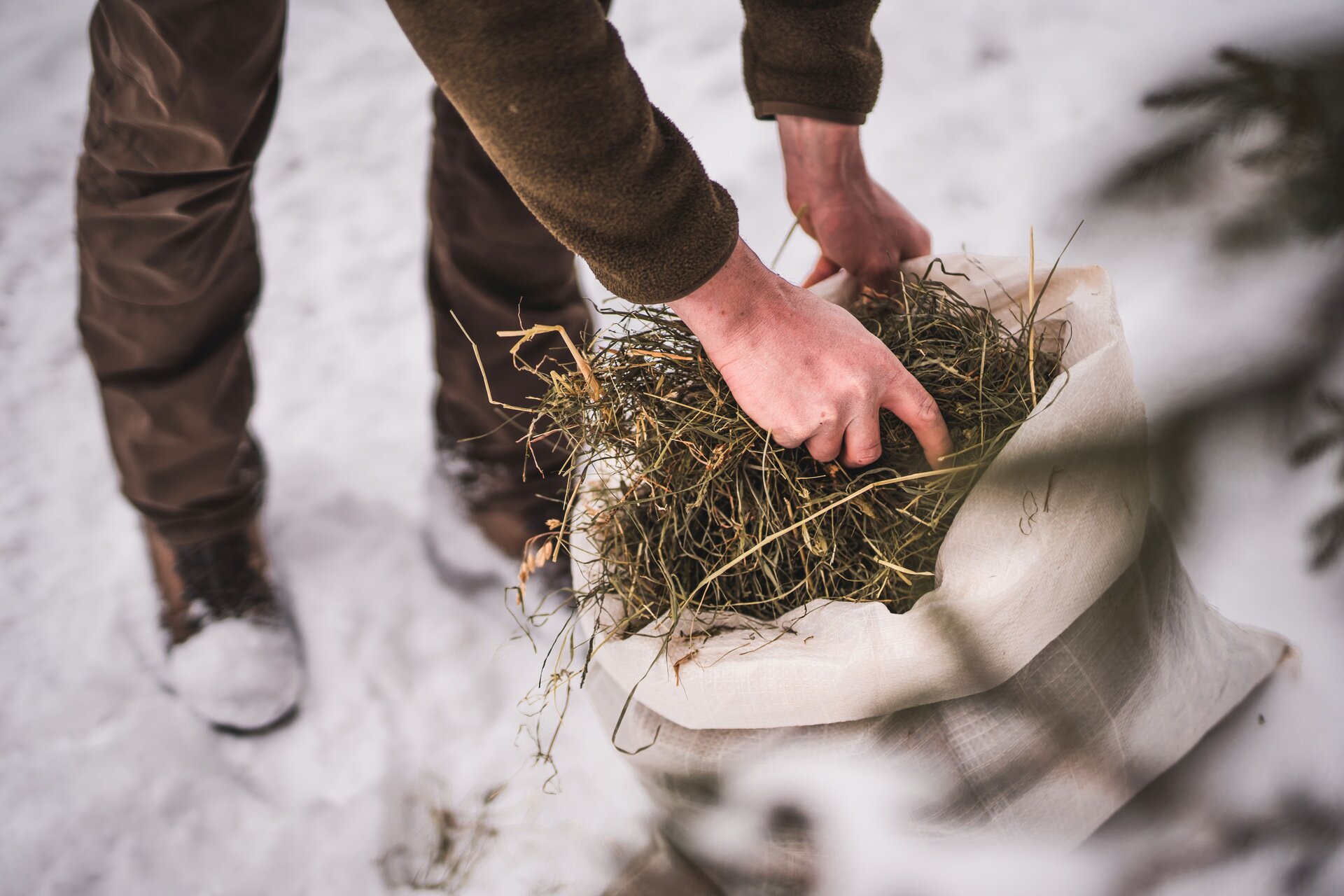
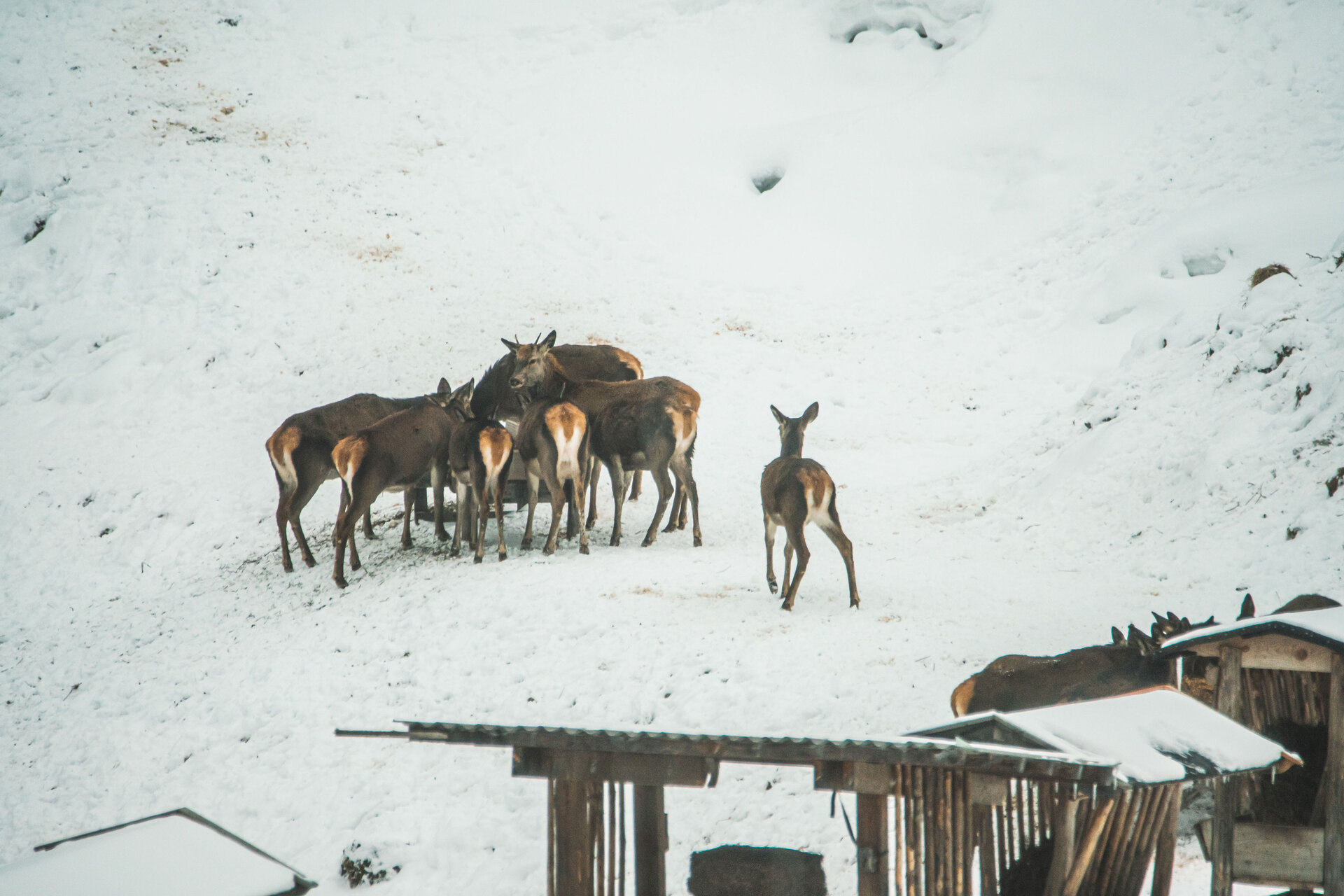
Without feeding, roe deer and red deer would have no chance of survival in the winter because they can’t find enough food in our snowy region. Driven by hunger, they even start eating the bark off the trees. This destroys the forest, but they still cannot survive. The damage to the trees not only results in losses for landowners and forest owners, but also increases the risk of mudslides. To prevent this, the wildlife is fed. This is quite a labor-intensive process. A single stag, for example, needs a good five kilograms of hay a day. In my hunting district, I’ve cared for about 100 animals. You know your population, of course—not all the animals come by every day, but in a snowy winter, you can assume they’ll stop by regularly.
But how did the animals survive the winter in the past?
In the past, the wildlife would migrate to the lowlands in winter, where there wasn’t as much snow. The animals migrated up to 200 kilometers, essentially overwintered there, and then returned to their home range in the spring. That’s no longer possible today because everything is now built up. The wildlife is practically trapped. That’s why we have to help the animals in the winter.
Don’t wild animals hibernate?
No, but the animals completely slow down their metabolism. Their heart rate drops to about 20 beats per minute, which is similar to hibernation. If the animals are startled by humans, they therefore expend a great deal of energy fleeing and are usually lost because it takes too much strength. It only takes a single person to enter their territory and disturb them. Despite being fed, these wild animals then have no chance. They cannot survive. That’s why it’s very important to me that people understand how their behavior affects wildlife
Otto, what exactly are the duties of a professional hunter?
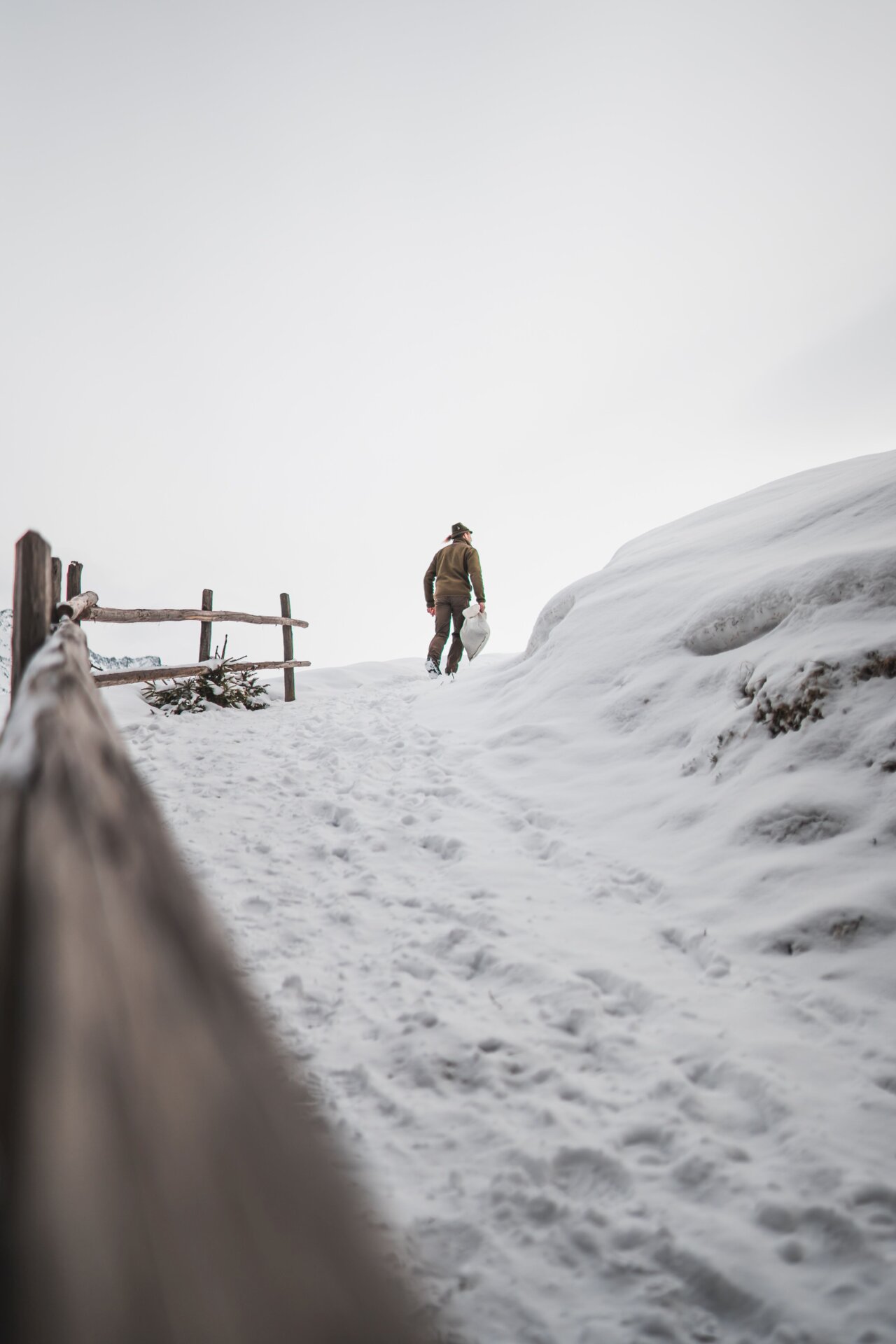
In the past, a professional hunter’s main task was to defend his hunting grounds against poachers. But the nature of the job has changed completely since then. Today, the main priority is to manage and regulate the game population in the hunting territory. Game is part of our cultural landscape and is just as important as bees are to flowers. A hunter must also ensure that the population doesn’t get too high, because that would harm the forest. A forest must be managed sustainably—this applies to trees that need to be harvested just as much as it does to wildlife. A significant part of my work involved feeding the animals in the winter. Roe deer and red deer are very shy animals, but they knew and accepted me. While feeding them, I always talked to them and built trust with them. You really have to have a feel for them and put yourself in their shoes—they are, after all, very intelligent creatures. They knew that I respected their habitat.
How can we enjoy nature without stressing the animals?
The most important thing is that snowshoers, backcountry skiers, and even downhill skiers use only marked slopes and designated trails. There are so many beautiful places and hiking trails in our area; there’s no need to venture off the beaten path. It’s hard for many people to believe, but the animals have adapted to the ski slopes and the noise that comes with them—they’re used to it by now and know they’re safe there. But when off-piste skiers veer off the trails and carve their own routes, it’s a disaster for wildlife. This cannot be emphasized enough. In my decades of experience as a professional hunter, I’ve observed that these shy animals don’t mind when people are out in the woods, as long as they stay on the trails. Hikers can even shout loudly—it doesn’t bother the animals. On the contrary, they actually prefer it, because then they know where the people are. That’s why it’s also better to hike in a group.
So the “enemy” is predictable, but if someone is standing 20 meters off the trail, it makes them nervous. Of course, the wildlife’s resting times must also be taken into account, which is why you should never be out at night. That’s the only way to ensure a stress-free coexistence between humans and animals. Since we’re increasingly restricting the habitat of native wildlife, it’s important to provide them with their last remaining refuges. Anyone spending time in the forest is in the animals’ living room and should be aware of that.
How do people react when you call them out on their misconduct?
On the whole, people are very understanding when you point out problems to them. In my experience, people are very understanding when you explain the situation to them. Most of the time, they’re then willing to turn around or return to the marked trails. Of course, there are always a few bad apples, but unfortunately, you’ll find them among hunters as well.
Have you had any special experiences in the forest?
Something comes to mind right away—something I’m still asked about sometimes today and that always makes me smile. When I’m out in nature, I often strike up conversations with hikers. Since my gear makes it clear that I’m a hunter, many of them actually want to know if I could show them a nest with chamois eggs. This idea comes from humorous postcards featuring images of chamois nests and eggs that are supposedly hatched by the chamois. Some people actually seem to believe this. These animals have almost as much of a mythical status as the edelweiss, because there are so many legends about them and they’re rarely seen.
How has your (dream) job shaped you?
I’ve developed a very strong connection to nature, which I’ve also passed on to my wife and children. Come rain or shine, I was out in nature and usually spent about three months of the year in the cabins in my hunting grounds. Fortunately, my family was understanding, and whenever possible, they would join me. There’s simply nothing more beautiful than living in complete harmony with nature and getting to know the animals in the forest up close.
“Respect Your Boundaries”
is an initiative of the State of Salzburg that aims to promote conflict-free interaction with nature and wildlife. The awareness campaign is designed to help raise awareness among locals and visitors about this issue and to foster an understanding of the impact that disrespectful behavior has on nature. The initiators—representatives from tourism, nature conservation, the hunting community, and politics—believe that many people who cause problems are not even aware of the consequences of their actions. Leaflets and informational signs are therefore used to highlight the dangers to wildlife. Information boards in the forest explain how to behave properly to protect wildlife and the forest.